1. Introduction & Historical Background
Analytical Solid Geometry သည် Three-dimensional space (သုံးဖက်မြင် ဟင်းလင်းပြင်) အတွင်းရှိ geometric figures များကို Algebraic methods များဖြင့် လေ့လာသော သင်္ချာပညာရပ်ခွဲတစ်ခု ဖြစ်သည်။ သာမန် Plane geometry တွင် X-axis နှင့် Y-axis ဟူ၍ 2D ကိုသာ အသုံးပြုသော်လည်း၊ Solid geometry တွင် $\displaystyle x, y, z$ ဟူသော Coordinates သုံးခုကို အသုံးပြုခြင်းဖြင့် Space အတွင်းရှိ Points, Lines, Planes, Spheres, Cones, Cylinders အစရှိသော Spatial forms များကို တိကျစွာ ဖော်ပြနိုင်ပါသည်။
သမိုင်းကြောင်းအရ ဤဘာသာရပ်သည် René Descartes နှင့် Pierre de Fermat တို့၏ Coordinates စနစ်မှ ဆင်းသက်လာခဲ့သည်။ ရှေးဂရိသင်္ချာပညာရှင်များ (Euclid, Archimedes, Apollonius) တို့သည် Solid geometry ကို လေ့လာခဲ့ကြသော်လည်း၊ Coordinate methods များ ပေါ်ပေါက်လာခြင်းက Geometric facts များကို Symbolic form ဖြင့် ဖော်ပြနိုင်စေခဲ့ရာ သင်္ချာသမိုင်းတွင် တော်လှန်ရေးတစ်ရပ် (Revolutionary shift) ဖြစ်ခဲ့ပါသည်။ Diagrams များအပေါ်သာ မှီခိုနေရမည့်အစား Equations များအသုံးပြု၍ အက္ခရာသင်္ချာနည်းအရ (Algebraically) စနစ်တကျ ဖြေရှင်းနိုင်လာခြင်း ဖြစ်ပါသည်။
2. The Fundamental Concept: 3D Coordinate System
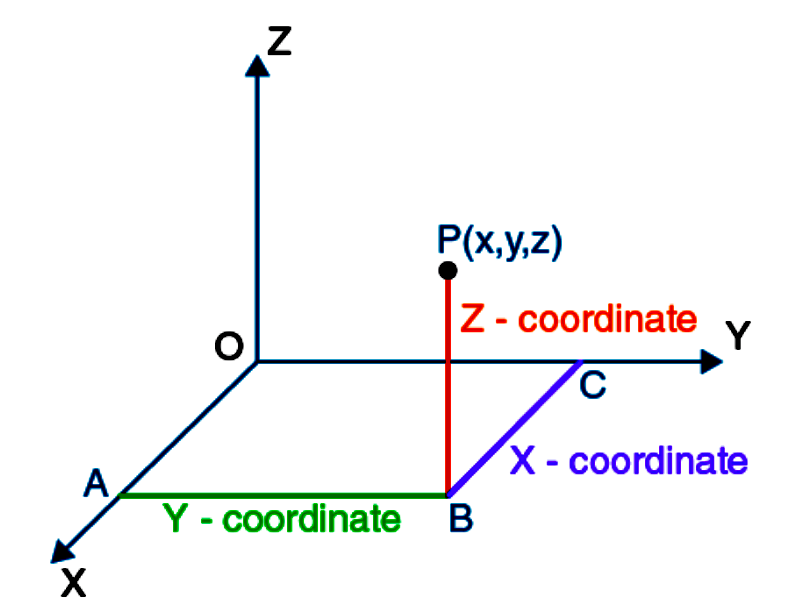
Analytical Solid Geometry ၏ အခြေခံအုတ်မြစ်မှာ Three-dimensional rectangular coordinate system ဖြစ်သည်။ Space အတွင်းရှိ Point တစ်ခုကို အချင်းချင်း ထောင့်မှန်ကျနေသော Axes (၃) ခုအပေါ် မူတည်၍ Ordered triple $\displaystyle (x, y, z)$ ဖြင့် တိကျစွာ သတ်မှတ်သည်။ ၎င်း axes သုံးခု ဆုံရာအမှတ်ကို Origin $\displaystyle O(0,0,0)$ ဟုခေါ်သည်။
- x သည် X-axis တစ်လျှောက် အရွေ့ (displacement)
- y သည် Y-axis တစ်လျှောက် အရွေ့
- z သည် Z-axis တစ်လျှောက် အရွေ့ များကို အသီးသီး ကိုယ်စားပြုသည်။
Points in Space: Core Formulas
Distance Formula: $\displaystyle P(x_1, y_1, z_1)$ နှင့် $\displaystyle Q(x_2, y_2, z_2)$ ကြားရှိ အကွာအဝေး $\displaystyle d$ သည် Pythagorean theorem ကို တိုးချဲ့ထားခြင်းဖြစ်ပြီး အောက်ပါအတိုင်း တွက်ချက်နိုင်သည်-
$$ \begin{aligned} PQ &= \sqrt{(x_2 - x_1)^2 + (y_2 - y_1)^2 + (z_2 - z_1)^2} \end{aligned} $$Section Formula: Point $\displaystyle R$ သည် $\displaystyle PQ$ segment ကို $\displaystyle m:n$ အချိုးဖြင့် Internally ဖြတ်လျှင် $\displaystyle R$ ၏ coordinates မှာ-
$$ \begin{aligned} R \left( \frac{mx_2 + nx_1}{m+n}, \frac{my_2 + ny_1}{m+n}, \frac{mz_2 + nz_1}{m+n} \right) \end{aligned} $$အကယ်၍ Midpoint ဖြစ်ပါက $\displaystyle m=n=1$ ဖြစ်သဖြင့် $\displaystyle \left( \frac{x_1+x_2}{2}, \frac{y_1+y_2}{2}, \frac{z_1+z_2}{2} \right)$ ဖြစ်သွားမည်။
3. The Core Concept: Directed Values $\displaystyle \langle a, b, c \rangle$
ရိုးရာ သင်္ချာလေ့လာမှုများတွင် Line တစ်ကြောင်း၏ လားရာကို Direction Ratios သို့မဟုတ် Direction Cosines $\displaystyle (l, m, n)$ (Unit vectors) များဖြင့် ရှုပ်ထွေးစွာ ဖော်ပြလေ့ရှိသည်။ သို့သော် ကျွန်ုပ်တို့သည် ထိုရှုပ်ထွေးမှုများကို လုံးဝ ဖယ်ရှား၍ "Directed Value" ဟူသော အလွန်ရိုးရှင်းသည့် အယူအဆကို Angle brackets $\displaystyle \langle a, b, c \rangle$ ဖြင့် အစားထိုး အသုံးပြုပါမည်။
Line တစ်ကြောင်းသည် Points နှစ်ခု $\displaystyle P(x_1, y_1, z_1)$ နှင့် $\displaystyle Q(x_2, y_2, z_2)$ ကို ဖြတ်သန်းသွားပါက၊ ၎င်း၏ လားရာကို ထို Coordinates များ၏ ခြားနားခြင်းများဖြင့် တိုက်ရိုက်သတ်မှတ်သည်- $$ \begin{aligned} \text{Directed Value} &= \langle x_2 - x_1, y_2 - y_1, z_2 - z_1 \rangle \end{aligned} $$
၎င်းကို ယေဘုယျအားဖြင့် $\displaystyle \langle a, b, c \rangle$ ဟု ရေးသားနိုင်သည်။ မည်သည့် Scalar multiple မဆို (ဥပမာ $\displaystyle \langle ka, kb, kc \rangle$) သည် တူညီသော (သို့) ပြိုင်နေသော လားရာ ကိုသာ ကိုယ်စားပြုသည်။ ထို့ကြောင့် Direction cosines များကဲ့သို့ $\displaystyle \sqrt{a^2+b^2+c^2}$ ဖြင့် အမြဲစားပေးရန် မလိုအပ်တော့ဘဲ Algebraic calculations များကို အလွန်သွက်လက်စေပါသည်။
4. Straight Lines in Space
Line တစ်ကြောင်းကို ၎င်းပေါ်ရှိ Point တစ်ခုနှင့် ၎င်း၏ Directed value $\displaystyle \langle a, b, c \rangle$ တို့ဖြင့် တိကျစွာ သတ်မှတ်နိုင်သည်။
Point $\displaystyle (x_1, y_1, z_1)$ ကိုဖြတ်ပြီး Directed value $\displaystyle \langle a, b, c \rangle$ ရှိသော Line ၏ Symmetric equation မှာ-
$$ \begin{aligned} \frac{x - x_1}{a} &= \frac{y - y_1}{b} = \frac{z - z_1}{c} \end{aligned} $$၎င်းကို Parametric form ဖြင့် $\displaystyle x = x_1 + at, \; y = y_1 + bt, \; z = z_1 + ct$ ဟုလည်း ရေးနိုင်သည်။ $\displaystyle t$ သည် Parameter ဖြစ်ပြီး Point တစ်ခုမှ စတင်ကာ $\displaystyle x, y, z$ ဘက်သို့ အချိုးကျ ရွေ့လျားသွားခြင်းကို ကိုယ်စားပြုသည်။
Angles and Relations Between Lines
Directed values နှစ်ခု $\displaystyle D_1 = \langle a_1, b_1, c_1 \rangle$ နှင့် $\displaystyle D_2 = \langle a_2, b_2, c_2 \rangle$ ကို အသုံးပြု၍-
- Parallel (ပြိုင်ခြင်း): $\displaystyle \frac{a_1}{a_2} = \frac{b_1}{b_2} = \frac{c_1}{c_2}$ ဖြစ်လျှင် ပြိုင်သည်။
- Perpendicular (ထောင့်မှန်ကျခြင်း): $\displaystyle a_1 a_2 + b_1 b_2 + c_1 c_2 = 0$ ဖြစ်လျှင် ထောင့်မှန်ကျသည်။
- Angle (ထောင့်ရှာခြင်း): ထောင့် $\displaystyle \theta$ ကို အောက်ပါအတိုင်း တွက်သည်- $$ \begin{aligned} \cos \theta &= \frac{a_1 a_2 + b_1 b_2 + c_1 c_2}{\sqrt{a_1^2 + b_1^2 + c_1^2} \sqrt{a_2^2 + b_2^2 + c_2^2}} \end{aligned} $$
Relations Between Lines in Space
Plane geometry တွင် မျဉ်းနှစ်ကြောင်းသည် ဆုံခြင်း (Intersecting) သို့မဟုတ် ပြိုင်ခြင်း (Parallel) သာ ရှိနိုင်သည်။ သို့သော် Solid geometry တွင် ထူးခြားသော တတိယအခြေအနေဖြစ်သည့် Skew lines (လမ်းလွဲမျဉ်းများ) ရှိလာပါသည်။ Skew lines များသည် ပြိုင်လည်းမပြိုင်၊ ဆုံလည်းမဆုံဘဲ မတူညီသော ပြင်ညီ (Planes) များပေါ်တွင် တည်ရှိနေခြင်း ဖြစ်သည်။
5. Planes in Space
ပြင်ညီ (Plane) သည် 3D Space အတွင်း အဆုံးမရှိ ပြန့်ကားနေသော Flat surface တစ်ခုဖြစ်သည်။ ၎င်းကို ဖော်ပြရန် Plane နှင့် အမြဲတမ်း ထောင့်မှန်ကျနေသော လားရာ (Normal) ကို အသုံးပြုသည်။ ဤနေရာတွင် Normal Directed Value ကို အသုံးပြုပါမည်။
ဤညီမျှခြင်းတွင် ပါဝင်သော $\displaystyle a, b, c$ ကိန်းများသည် ပြင်ညီသို့ ထောင့်မှန်ကျသော Normal Directed Value $\displaystyle \langle a, b, c \rangle$ ပင် ဖြစ်သည်။
Special Forms and Properties:
- Intercept Form: ပြင်ညီသည် axes များကို $\displaystyle a, b, c$ တွင် အသီးသီး ဖြတ်သွားပါက- $$ \begin{aligned} \frac{x}{a} + \frac{y}{b} + \frac{z}{c} &= 1 \end{aligned} $$
- Angle Between Two Planes: ပြင်ညီနှစ်ခုကြားရှိ ထောင့်သည် ၎င်းတို့၏ Normal Directed Values များကြားရှိ ထောင့်နှင့် အတူတူပင်ဖြစ်သည်။ (အထက်ပါ $\displaystyle \cos \theta$ ဖော်မြူလာအတိုင်း တွက်ချက်နိုင်သည်)။
- Angle Between Line and Plane: Line ၏ Directed value $\displaystyle \langle a_1, b_1, c_1 \rangle$ နှင့် Plane ၏ Normal $\displaystyle \langle a_2, b_2, c_2 \rangle$ တို့ကို အသုံးပြု၍- $$ \begin{aligned} \sin \alpha &= \frac{|a_1 a_2 + b_1 b_2 + c_1 c_2|}{\sqrt{a_1^2 + b_1^2 + c_1^2} \sqrt{a_2^2 + b_2^2 + c_2^2}} \end{aligned} $$
- Distance of a Point from a Plane: Point $\displaystyle P(x_1, y_1, z_1)$ မှ ပြင်ညီ $\displaystyle ax + by + cz + d = 0$ သို့ ထောင့်မှန်ကျ အကွာအဝေးမှာ- $$ \begin{aligned} \text{Distance} &= \frac{|ax_1 + by_1 + cz_1 + d|}{\sqrt{a^2 + b^2 + c^2}} \end{aligned} $$ (အကယ်၍ Numerator သုညဖြစ်သွားပါက ထိုအမှတ်သည် ပြင်ညီပေါ်တွင် ရှိနေသည်ဟု မှတ်ယူရမည်။)
6. 3D Surfaces & Locus
Analytical Solid Geometry တွင် Second-degree equations များသည် လှပသော 3D Surfaces များကို ကိုယ်စားပြုသည်။ Locus ဟူသည် သတ်မှတ်ထားသော Condition တစ်ခုနှင့် ကိုက်ညီသည့် အမှတ်များအားလုံး စုဝေးရာလမ်းကြောင်း ဖြစ်သည်။
- Sphere: Fixed point (Center) $\displaystyle C(a, b, c)$ မှ radius $\displaystyle r$ ကွာဝေးသော အမှတ်များ (Locus) ဖြစ်သည်။ $$ \begin{aligned} (x - a)^2 + (y - b)^2 + (z - c)^2 &= r^2 \end{aligned} $$ General form အနေဖြင့် $\displaystyle x^2 + y^2 + z^2 + 2ux + 2vy + 2wz + d = 0$ ဟု ဖော်ပြနိုင်သည်။
- Cylinder: Coordinate equation တစ်ခုတွင် Variable တစ်ခု ပျောက်နေပါက ၎င်းသည် ထိုဝင်ရိုးနှင့် ပြိုင်သော Cylinder ကို ကိုယ်စားပြုလေ့ရှိသည်။ ဥပမာ $\displaystyle x^2 + y^2 = a^2$ သည် Z-axis နှင့် ပြိုင်သော Circular cylinder ဖြစ်သည်။
- Cone: မျဉ်းများအားလုံး Fixed point တစ်ခုကို ဖြတ်သန်းသွားသော Locus ဖြစ်သည်။ $\displaystyle x^2 + y^2 = z^2$ သည် Origin တွင် Vertex ရှိသော Right circular cone ဖြစ်သည်။
- Quadric Surfaces: ဥပမာအားဖြင့် Ellipsoid $\displaystyle \left( \frac{x^2}{a^2} + \frac{y^2}{b^2} + \frac{z^2}{c^2} = 1 \right)$၊ Hyperboloid၊ Paraboloid အစရှိသော သဘာဝနှင့် အင်ဂျင်နီယာပညာရပ်များရှိ အရေးပါသည့် ပုံသဏ္ဌာန်များ ဖြစ်သည်။
7. The Role of Mathematical Induction in Solid Geometry
Mathematical Induction (MI) သည် Sequences များတွင်သာမက Solid geometry တွင်လည်း အောက်ပါအတိုင်း အလွန်အဓိပ္ပါယ်ရှိစွာ အသုံးဝင်ပါသည်-
- Generalizing to n-dimensions: 3D Space တွင် မှန်ကန်သော Distance Formulas နှင့် Sphere equations များကို $\displaystyle n$-dimensional Euclidean space သို့ တိုးချဲ့ရာတွင် Induction ဖြင့် သက်သေပြနိုင်သည်။
- Properties of Families: Recurrence relation များဖြင့် ဖွဲ့စည်းထားသော Planes သို့မဟုတ် Spheres အုပ်စုများ၏ ဘုံတူညီသော Properties များကို သက်သေပြရာတွင် အသုံးပြုသည်။
- Algorithmic Verification: Computer Graphics အတွက် ရေးဆွဲထားသော 3D algorithms များ၏ အဆင့်တိုင်းတွင် Geometric constraints (ဥပမာ- Coplanarity) များ မှန်ကန်စွာ တည်ရှိနေကြောင်း (Invariants) ကို MI ဖြင့် စစ်ဆေးလေ့ရှိသည်။
8. Common Difficulties & Mistakes
ကျောင်းသားများအနေဖြင့် Analytical Solid Geometry ကို လေ့လာရာတွင် Spatial imagination နှင့် Algebraic manipulation နှစ်ခုစလုံးကို တစ်ပြိုင်နက် လုပ်ဆောင်ရသဖြင့် အခက်အခဲများ ကြုံတွေ့ရလေ့ရှိသည်။
Common Mistakes to Avoid:
- Treating 3D problems like 2D: 2D ကဲ့သို့ မျဉ်းနှစ်ကြောင်းသည် အမြဲတမ်း ဆုံမည် သို့မဟုတ် ပြိုင်မည်ဟု ယူဆခြင်း (Skew lines များ ရှိတည်နေမှုကို မေ့လျော့ခြင်း)။
- Ignoring one coordinate: Solid geometry တွင် Point တိုင်း၌ $\displaystyle (x, y, z)$ သုံးခုလုံး ပါဝင်ကြောင်း မေ့လျော့ခြင်း။
- Misusing proportionality: Line များ၊ Plane များ ပြိုင်မပြိုင် စစ်ဆေးရာတွင် Directed values $\displaystyle \langle a, b, c \rangle$ များ အချိုးကျ (Proportional) ဖြစ်မှုကို သေချာ မစစ်ဆေးခြင်း။
- Forgetting absolute value: Distance တွက်ရာတွင် $\displaystyle | \dots |$ ကို မေ့လျော့ခြင်း။ (အကွာအဝေးသည် အမြဲတမ်း အပေါင်းကိန်းဖြစ်ရမည်)။
- Relying only on diagrams: 3D ပုံကြမ်းများသည် အမြင်မှားစေနိုင်သဖြင့် Algebra equations များဖြင့်သာ အတည်ပြု စစ်ဆေးရမည်။
9. Coordinate Geometry as a Language of Space & Applications
Analytical Solid Geometry သည် ဟင်းလင်းပြင် (Space) ကို တိကျစွာ ဖော်ပြနိုင်သော ဘာသာစကားတစ်ခု ဖြစ်သည်။ "အမှတ်တစ်ခုက ပြင်ညီအပေါ်မှာ ရှိတယ်"၊ "မျဉ်းနှစ်ကြောင်းက ထောင့်မှန်ကျတယ်" စသည့် Geometric အမှန်တရားများကို Equations များအဖြစ် ပြောင်းလဲကာ တွက်ချက်သက်သေပြနိုင်ပါသည်။ ထို့ကြောင့် အောက်ပါနယ်ပယ်များတွင် ကျယ်ကျယ်ပြန့်ပြန့် အသုံးပြုကြသည်-
- Mathematics & Calculus: Multivariable calculus, Differential geometry နှင့် Linear algebra တို့၏ အခြေခံအုတ်မြစ်ဖြစ်သည်။
- Physics & Engineering: Projectile motion များ၊ အာကာသ လမ်းကြောင်း (Trajectories)၊ Machine design နှင့် Pipeline geometry များ။
- Architecture & Construction: အဆောက်အအုံပုံစံများ (Building layouts)၊ မျက်နှာပြင်များ (Surfaces) ဖြတ်သန်းသွားမှုများ။
- Computer Graphics & Robotics: 3D modeling၊ Collision detection၊ စက်ရုပ်များ၏ Inverse kinematics နှင့် Medical Imaging (MRI, CT scans 3D reconstruction)။
10. Simple Illustrative Examples
Example 1: Midpoint in Space
Find the midpoint of $\displaystyle A(2, 1, 5)$ and $\displaystyle B(6, 7, 9)$.
Example 2: Equation of a Sphere
Find the equation of a sphere with center $\displaystyle (1, -2, 3)$ and radius $\displaystyle 5$.
Example 3: Point to Plane Distance
Find the distance from $\displaystyle P(1, 2, 3)$ to the plane $\displaystyle x + 2y + 2z - 9 = 0$.
11. Conclusion & Short Recap
Analytical Solid Geometry သည် ပုံသဏ္ဌာန် (Shape) နှင့် ညီမျှခြင်း (Equation)၊ ဟင်းလင်းပြင် (Space) နှင့် သင်္ကေတ (Symbol) တို့ကြား ခိုင်မာသော ပေါင်းကူးတံတားတစ်ခု ဖြစ်သည်။ Vectors များကို အသုံးမပြုဘဲ "Directed Values $\displaystyle \langle a, b, c \rangle$" များကိုသာ အသုံးပြုခြင်းဖြင့် Line များ၊ Plane များနှင့် Sphere များ၏ ညီမျှခြင်းများကို Coordinates များ၏ Algebraic relationship များအဖြစ် အလွန်ရိုးရှင်း လှပစွာ တည်ဆောက်နိုင်ကြောင်း တွေ့မြင်ရမည်ဖြစ်သည်။
ဤဘာသာရပ်သည် သီအိုရီပိုင်းအရ နက်နဲရုံသာမက Science, Engineering, Architecture နှင့် Computer Graphics နယ်ပယ်များအတွက် အလွန်အရေးပါသော လက်တွေ့အသုံးချ ကိရိယာတစ်ခုလည်း ဖြစ်သည်။ Analytical Solid Geometry ကို ကျွမ်းကျင်စွာ တတ်မြောက်ခြင်းက 3D Space ၏ ပြဿနာများကို စနစ်ကျ၍ ခိုင်မာသော Mathematical တွေးခေါ်မှုဖြင့် တိကျစွာ ဖြေရှင်းနိုင်စွမ်းကို ရရှိစေမည် ဖြစ်ပါသည်။